Understanding the TipJAR: How Thenks Puts Staff in Control
How the Thenks TipJAR works — from guest QR payment to staff M-PESA payout. A step-by-step guide to tip pools, staff committees, and transparent distribution for hotels and safari camps.
Thenks Team
Thenks Team
The Thenks TipJAR is a dedicated digital tip pool for your property. Guest tips collect in the TipJAR — separate from hotel revenue — and a staff committee distributes them to M-PESA accounts on a schedule the team chooses. This post walks through every step, from the guest scanning a QR code to the payout notification on a housekeeper’s phone.
If you want the short definitional answer first, read What is a TipJAR?.
How does a guest tip?
It starts with a QR code. Thenks generates a unique QR code for each property (and optionally, for each department or individual staff member). This code is printed on small cards placed in guest rooms, on restaurant tables, or given to staff to display.
When a guest scans the code, they land on a simple, branded tipping page. They enter an amount, optionally leave a message, and pay using:
- Credit or debit card (Visa, Mastercard, Amex)
- Apple Pay or Google Pay
- M-PESA (for local guests)
The whole process takes under 30 seconds. No app download. No account creation.
Where does the money go?
Instead of going directly to individual staff accounts, every tip lands in the TipJAR — a dedicated digital pool specific to that property.
This is the key design decision that makes Thenks different from simple peer-to-peer payment apps. The TipJAR keeps tips completely separate from hotel revenue. It is not a hotel account. It is a staff account, managed by the staff committee.
This separation matters for three reasons:
- Legal clarity — tips are clearly categorized as staff income, not hotel revenue
- Trust — neither staff nor management can access the funds unilaterally
- Transparency — everyone can see what is in the pool at any time
Who decides how tips are shared?
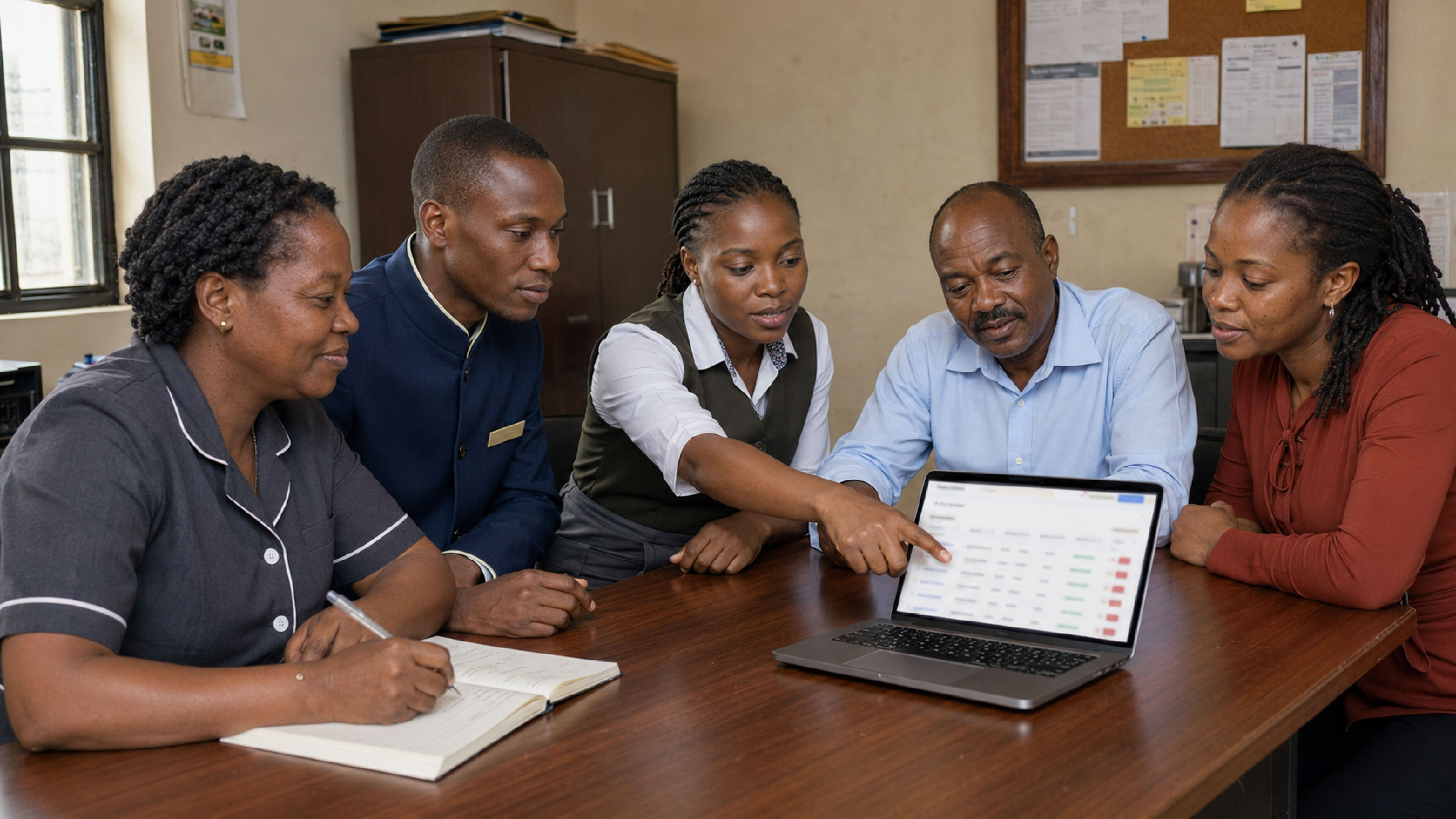
Every property using Thenks sets up a Staff Committee — a small group of elected staff representatives who manage how tips are distributed. This committee decides:
- Distribution frequency: daily, weekly, or monthly
- Distribution rules: equal split? by role? by hours worked?
- Departments included: all staff, or just front-of-house?
Thenks provides the tools, but the committee makes the decisions. Management cannot override or access committee decisions without committee approval.
When the committee is ready to distribute, they trigger a distribution from the Thenks dashboard. The system calculates individual amounts based on the configured rules and queues the payouts.
How do staff receive their share?
Payouts go directly to each staff member’s M-PESA account — no bank account required. This is crucial in the Kenyan context, where M-PESA penetration among hospitality workers is near-universal.
The payout arrives with a notification and a summary showing:
- The period the tips cover
- The total pool amount
- The individual’s share and the calculation behind it
Staff see exactly why they received the amount they did. There is no ambiguity, no “management took a cut” suspicions, no confusion.
What is the audit trail?
Everything is logged. Every tip received, every distribution authorized, every payout sent — it is all timestamped and stored. Staff can review their full earnings history. Management can review distribution records. Thenks maintains records for a minimum of seven years for compliance purposes.
This audit trail is what makes disputes essentially disappear. When everything is transparent and provable, there is nothing to argue about.
What can the hotel see?
Hotels access a separate management dashboard with analytics — tip volumes, trends, guest feedback scores, department comparisons — but they cannot access or alter the TipJAR itself.
The data is valuable for operational insights: which departments are getting the most tips? Are tips higher on weekends? How does tip volume correlate with occupancy? These insights help hotels understand their service quality in a completely new way.
What does this mean for staff welfare?
The TipJAR model is built on a simple belief: staff who deliver exceptional service deserve to benefit from it directly, fairly, and transparently. Not as an afterthought. Not at the discretion of management. As a right.
In Kenya’s hospitality sector, where service workers are often highly skilled but significantly underpaid relative to the value they create, digital tipping represents a meaningful step toward financial inclusion and dignity.
For guest-facing tipping customs in Kenya, see Tipping in Kenya. To get your property set up, see Set up Thenks in 15 minutes.
Have questions about how the TipJAR would work at your property? Browse our FAQs or book a demo.
Frequently asked questions
Can hotel management access the TipJAR? No. The staff committee controls distribution. Management sees analytics but cannot spend or redirect TipJAR funds.
How often can tips be distributed? The committee chooses — daily, weekly, or monthly. They trigger each distribution from the Thenks dashboard.
What payment methods do guests use? Card, Apple Pay, Google Pay, and M-PESA in 135+ currencies. No app download required.
Do staff need bank accounts? No. Payouts go to M-PESA, which is near-universal among Kenyan hospitality workers.
How is this different from a personal till number? A personal till pays one person instantly. A TipJAR collects tips for the whole team and distributes them by committee rules with a full audit trail.