How to Tip in Africa: Safari, Lodge and Hotel Etiquette
How to tip in Africa — safari guide vs lodge staff pool, USD vs local currency, and digital tipping platforms for hotels and camps in Kenya and East Africa.
Thenks Team
Thenks Team
“How do I tip in Africa?” is usually asked by someone packing for more than one country. The honest answer is that Africa is not one tipping culture. Kenya, Tanzania, Rwanda, Uganda and South Africa share some safari habits and differ everywhere else.
What they share is this: hospitality teams still rely on guest appreciation, and international visitors are increasingly cashless. The awkward moment at reception is the same from the Mara to the Kruger.
Start with the property, not a continent-wide percentage
In most safari camps you tip two groups: the guide (directly) and the camp team (through a box or digital pool). City hotels and restaurants are closer to a 10% restaurant guideline if no service charge is on the bill.
Country notes:
- Kenya and Tanzania: USD is widely used at safari camps. KES or TZS are better in towns. See tipping in Kenya and safari tipping in Kenya.
- Uganda and Rwanda: similar per-guest-per-day safari logic; gorilla and chimpanzee treks often have their own porter and ranger norms set by the operator.
- South Africa and Namibia: local rand (or NAD) is preferred. USD is less useful than in East Africa. Camps will tell you if card tips are possible.
Always read the in-room booklet. If it is silent, ask the manager once, early.
Typical safari planning figures
These are the ranges most East African operators publish. They are for budgeting, not for shaming anyone.
| Who | East Africa (USD) | Notes |
|---|---|---|
| Guide | 10–20 per guest per day | Higher on private vehicles |
| Camp staff pool | 5–15 per guest per day | Shared among the team you do not see |
| Transfer driver | 2–10 per transfer | At drop-off |
| Trek porter (where used) | 10–20 per trek | Confirm locally |
A couple on a week-long fly-in safari should plan a few hundred dollars in addition to the trip cost. That sounds large until you remember it is spread across every person who cooked, cleaned, tracked and drove.
Cash, cards and mobile money
Cash is still king in many remote camps. That does not mean it is a good system.
- Carry small, clean notes in the currency the camp named.
- Do not assume a room bill card machine can also take a tip. Many properties refuse to mix tips with hotel revenue — for accounting and tax reasons.
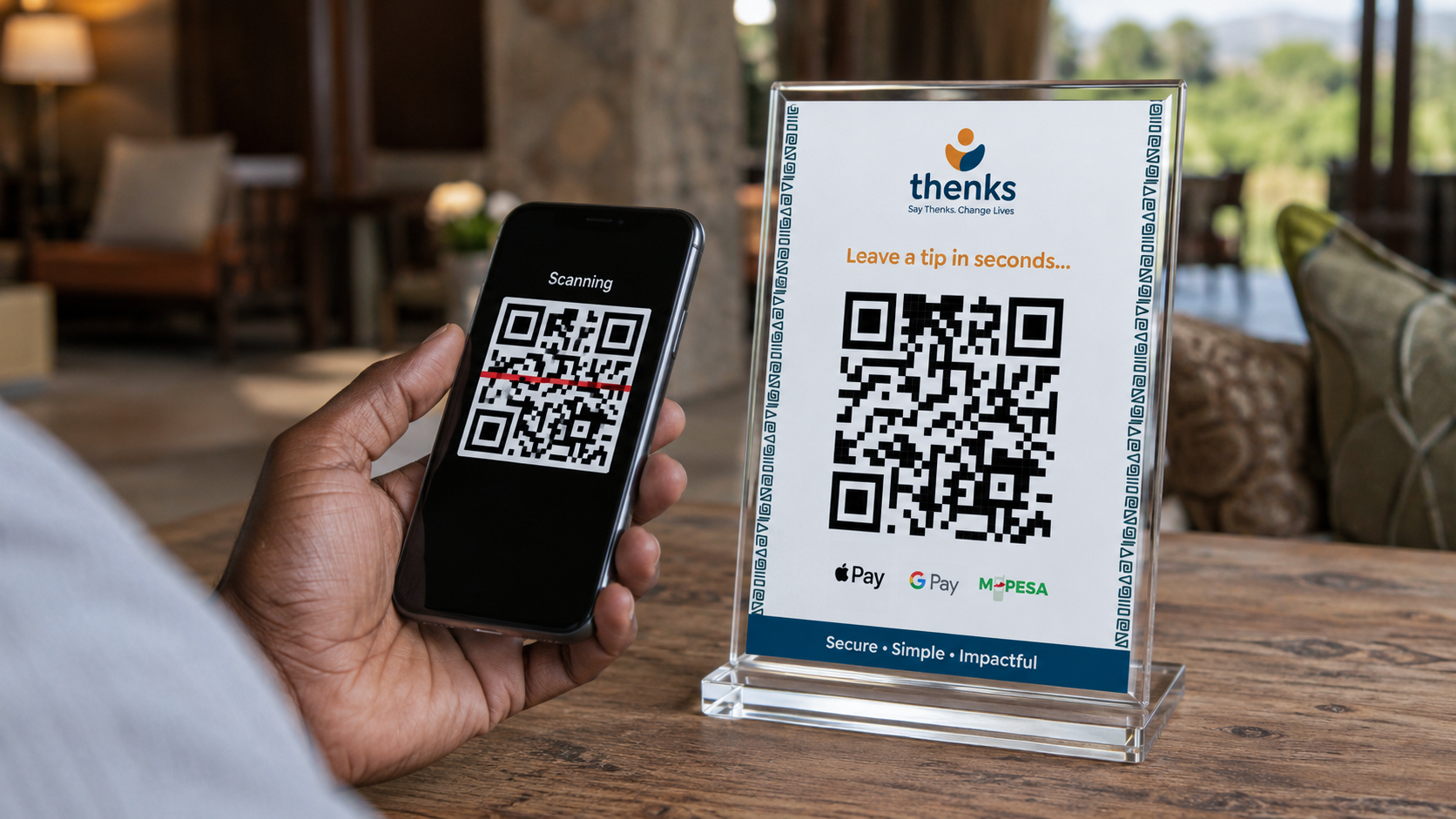
- In Kenya, M-PESA is how staff actually receive money. A digital TipJAR that pays out to mobile money solves the last mile that a dollar envelope cannot.
Thenks is built for that last mile in African hospitality: guests scan a QR code, pay by card, Apple Pay, Google Pay or M-PESA, and the tip stays in a dedicated account rather than disappearing into the property till.
A short checklist before you fly
- Budget tips per person per night, not as a leftover.
- Pack a few envelopes and a pen.
- Tip at the end of each camp, not at the end of the whole trip.
- If you will be cashless, email the lodge and ask whether they use Thenks or another digital option.
- Never tip for something that is clearly a bribe — police, park gates, officials.
Tipping well in Africa is less about memorising a chart and more about closing the gap between a guest who wants to say thank you and a team that still, too often, only gets that thank you when someone has the right banknote.
Hotels and lodges that want that gap closed can start a Thenks TipJAR or book a demo.